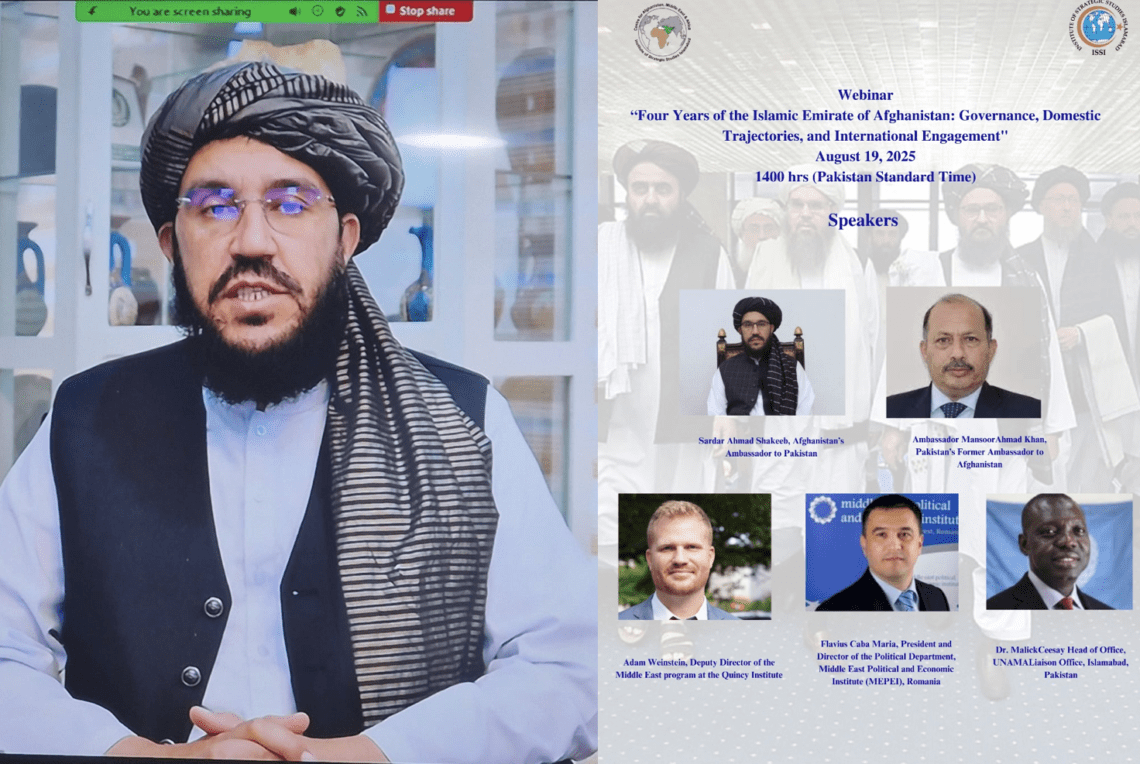
1- Afghanistan’s New Chapter of Stability and Progress: Under the Islamic Emirate, Afghanistan has made significant strides toward peace, stability, and progress. Over the past four years, the nation has faced numerous challenges but has seen remarkable achievements in governance, economic development, and international engagement.
2- Governance and National Unity: Upon assuming leadership, the Islamic Emirate prioritized ending decades of conflict. This was achieved by declaring a general amnesty, which ended cycles of revenge and instability. A justice system based on Sharia law was established, with courts active in all 34 provinces, ensuring access to civil, criminal, and other relevant laws. The eradication of warlordism and disorder has enabled citizens to move freely across the country, engage in trade, and participate in social and economic activities, creating a unified and cooperative society.
3- National Security and Internal Peace: Security was a top priority, and Afghanistan now enjoys nationwide peace. Armed conflicts have ended, and parallel armed groups have been dismantled. The army and police now operate under unified command, eliminating divisive power centers. National unity has been preserved, and internal fragmentation has been prevented, further strengthening the social fabric.
4- Eradication of Narcotics and Social Welfare Initiatives: The cultivation of narcotics, which was once widespread in Afghanistan, has been fully eradicated. Alongside this, over 120,000 drug addicts have received treatment and vocational training. Social welfare programs have also played a crucial role, with millions of refugees welcomed and resettled. Monthly allowances are now provided to 650,000 orphans, widows, and persons with disabilities, demonstrating a strong commitment to national welfare.
5- Economic Self-reliance and Development: Afghanistan has achieved economic self-reliance. Previously reliant on foreign assistance for 70% of its budget, the nation now funds its national budget entirely through domestic revenue. The Afghan currency has remained stable against the US dollar for the past four years, reflecting growing economic stability. Several major projects in agriculture, energy, and infrastructure, such as the Qosh Tepa Canal, the reconstruction of the Salang highway, and the construction of the Pashdan Dam, showcase tangible progress. Additionally, the national development company has created over 100 new types of equipment, contributing to both agriculture and industry.
6- Infrastructure and Energy Projects: The Islamic Emirate has initiated large-scale projects that have significantly advanced the country’s infrastructure. Over the past year alone, 239 major projects worth 12 billion USD were launched, including energy projects like a 10,000-megawatt power plant and 600-megawatt solar projects. Key infrastructure projects, including road networks within Kabul city and major highways to other provinces like Kandahar, Jalalabad, and Ghazni, are underway or completed.
7- Strengthening Social Cohesion: Over the past four years, there has been a strong focus on resolving ethnic and tribal disputes. With the help of traditional councils and local elders, long-standing conflicts have been addressed, playing a key role in reinforcing national unity. These efforts have brought the nation closer together and built stronger ties between the government and the people.
8- Balanced Foreign Policy and International Engagement: Afghanistan has pursued a balanced foreign policy focused on economic diplomacy. The Islamic Emirate has maintained neutral relations with different global blocs and sought mutually beneficial relations with all nations. The government has engaged in over 2,814 diplomatic interactions with 101 countries, and more than 20 embassies remain active in Kabul. Additionally, Afghan embassies and consulates operate in 41 countries, further strengthening international ties.
9- Regional Connectivity and Global Recognition: Afghanistan’s role as a regional hub has been enhanced through key infrastructure projects like the TAPI gas pipeline, CASA-1000 power project, and the Trans-Afghan railway. Afghanistan has signed agreements worth nearly 20 billion USD with international investors, reflecting growing global confidence in the nation. Russia’s official recognition of the Islamic Emirate marked a historic milestone in international diplomacy. Furthermore, the United Nations and other international organizations continue to provide humanitarian aid and assistance for reconstruction in close coordination with the Islamic Emirate.
Keypoints-Afgambassador-CAME